Deeply furrowed bark, needles encircling upsweeping branches, and large scaly cones. When you see these characteristics on a tree, you are probably looking at a Douglas fir, one of the most prominent tree species in the Pacific Northwest.
With so many plants, animals and fungi all working together to create an interconnected ecosystem, it’s hard not to be just a little intrigued by the rugged forests of the PNW. The allure of these forests inspired me to start this series where each week I’ll talk about a different aspect of the forests of the Northwest, what makes it unique and how it connects to the whole system.
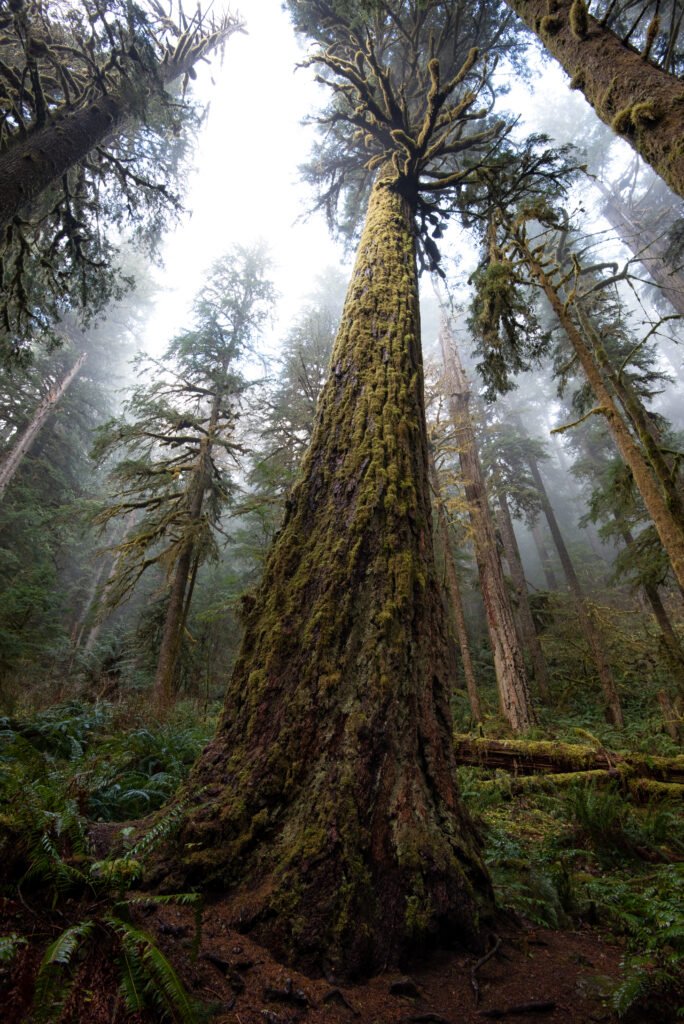
For the first installment, I’ll start in the forest canopy with the impressive Douglas fir. Doug firs can be found in all sizes throughout the PNW, from freshly planted saplings in clearcuts, to towering giants in the coastal rainforests. The trees can reach heights of up to 300 feet, making it one of the tallest trees in the world. Needless to say, these beasts often dominate the forest canopy.
Food and shelter for threatened species
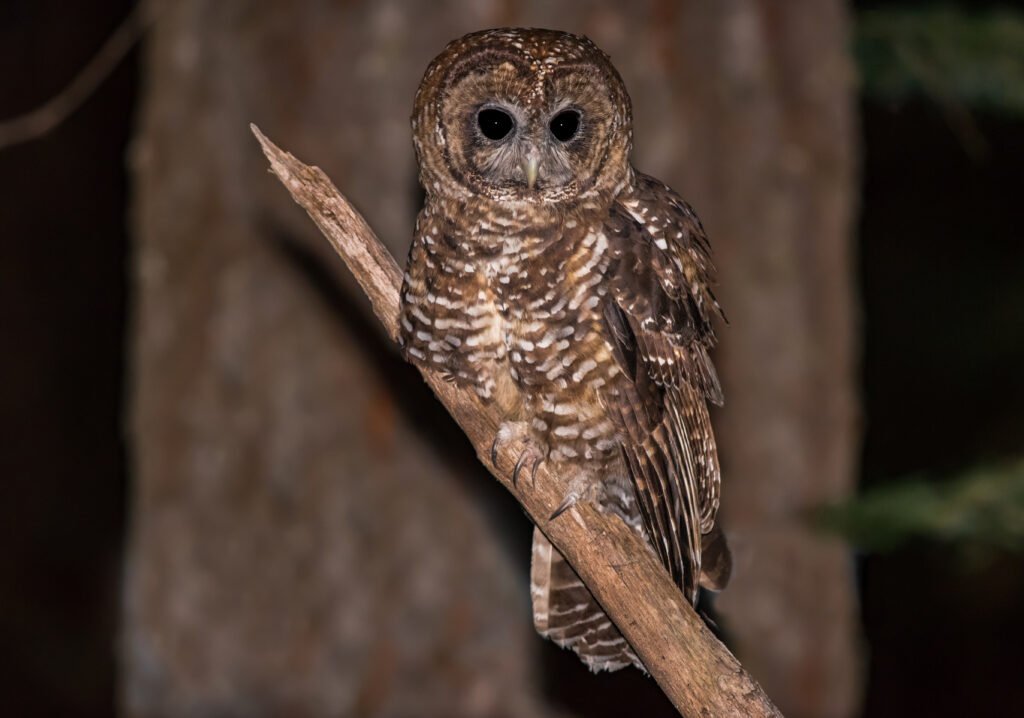
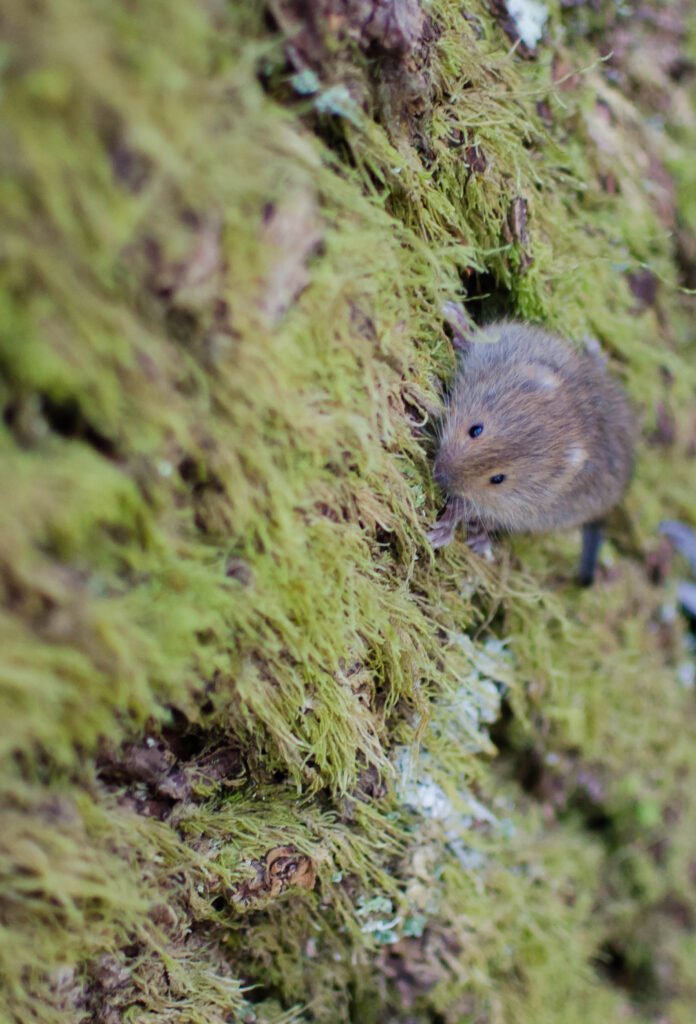
Reaching such impressive heights, you would be right to assume that the Douglas fir can grow to an equally impressive age. These trees can live for hundreds, if not over a thousand years old. During their lifetime they serve the purpose of providing food and shelter for other creatures in the ecosystem. The Douglas fir is unique in the fact that one federally threatened species and another Endangered Species Act candidate rely on it for these essentials. The two species are the red tree vole (Near Threatened), and the controversial northern spotted owl (Federally Threatened). The red tree vole is known to feed almost exclusively on Douglas fir needles (once the poisonous parts are removed), and in one spotted owl study, 87% of nests were found in Douglas firs.
It’s all connected
Studies show that both of these species prefer to live in mature forests, so it goes without saying that the Douglas fir, the grandfathers of the PNW forests, are the top habitat picks for these species. Conservation of old-growth stands is extremely important for the continued survival of specialized species such as the Spotted Owl and the red tree vole. In fact, the spotted owl has been the poster child for protecting old forests since the 90s. Not only do these two species share a home in old-growth Douglas fir forests, but they are also directly connected in that the red tree vole is one of the owls’ favorite food sources. So as you’re reading this, somewhere out in the PNW there’s a spotted owl sitting on a Douglas fir branch snacking on a red tree vole!
How to ID this species
Needles
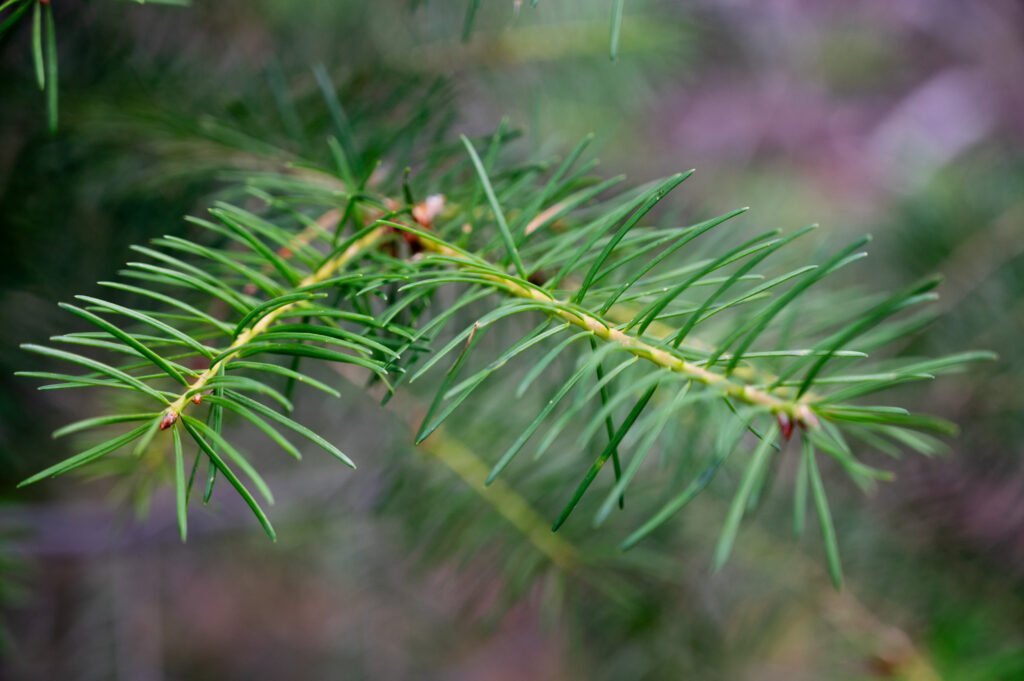
The needles of the Douglas-fir are flat with slightly pointed tips and range from yellow-green to blue-green in color, depending on region. They are arranged around the stems in a spiral formation, almost resembling a bottle brush.
Female Cones
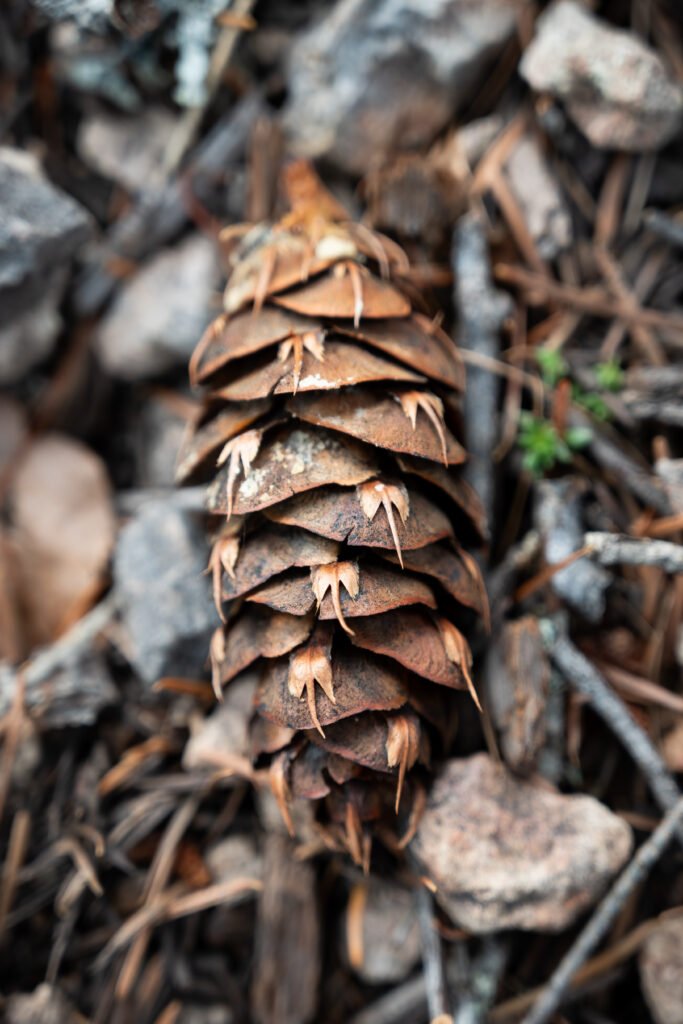
Douglas-firs have male and female cones, but for the sake of this article, I am showing the female cone due to its distinctive appearance. The cones start out green and once mature, they become reddish brown and grow to a 2-4 inches long. They are encircled with uniform scales and contain distinctive bracts with three points that resemble mouse butts. These mouse butts are a dead giveaway that you are looking at a Douglas-fir female cone.
Bark
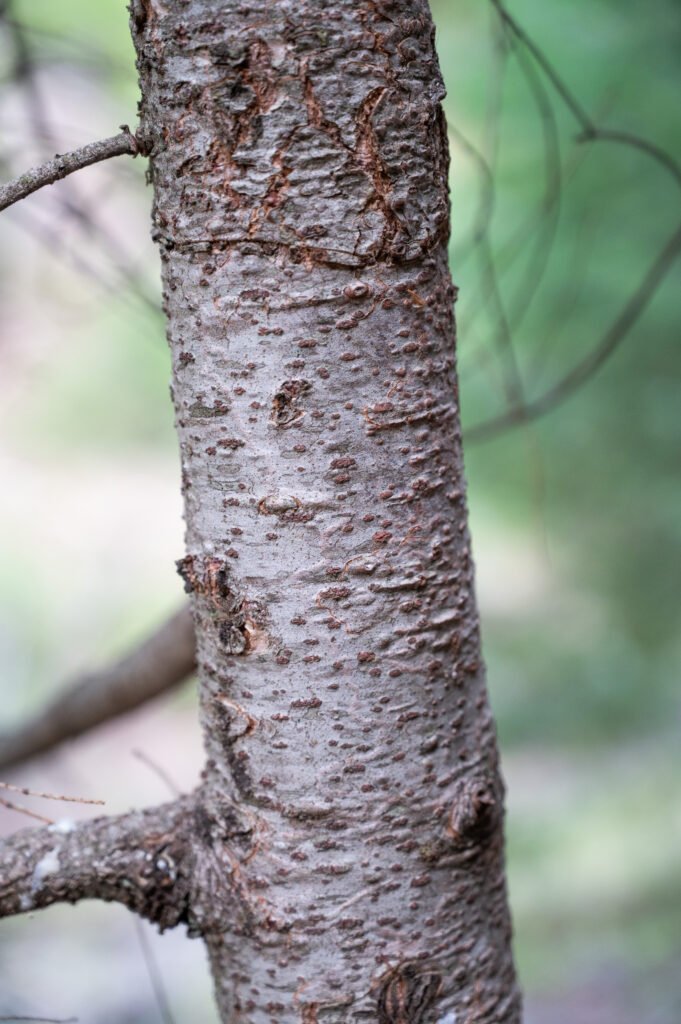
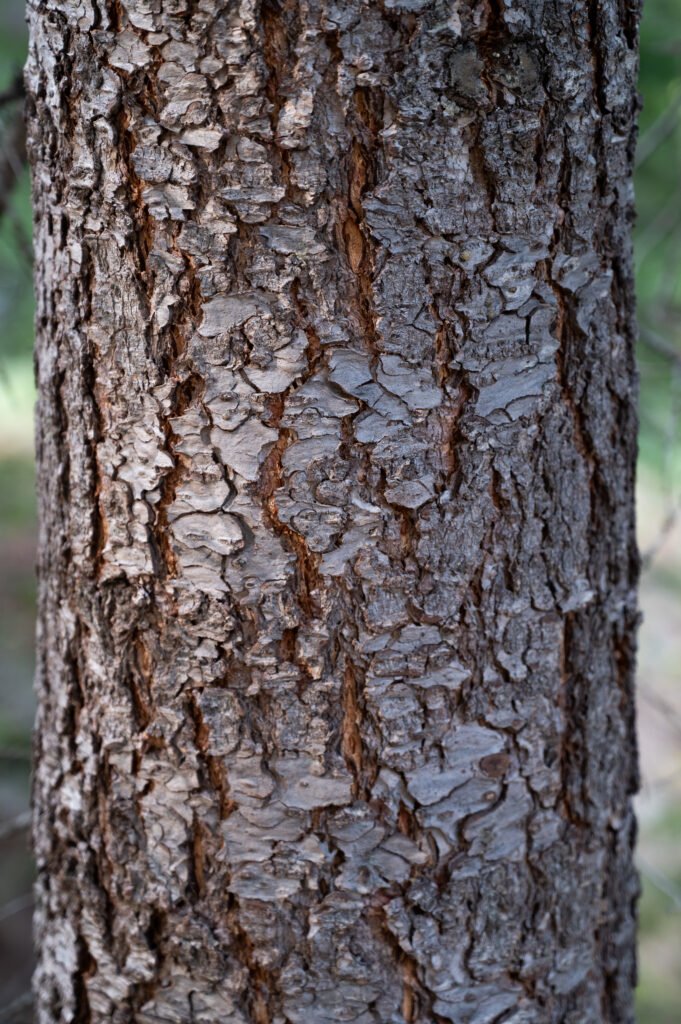
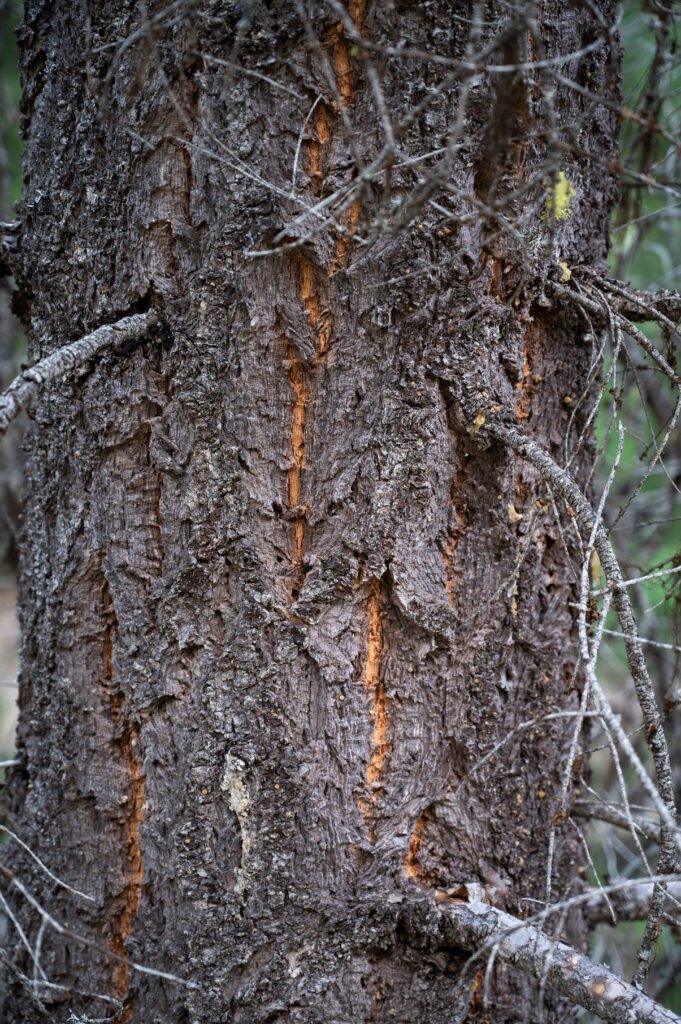
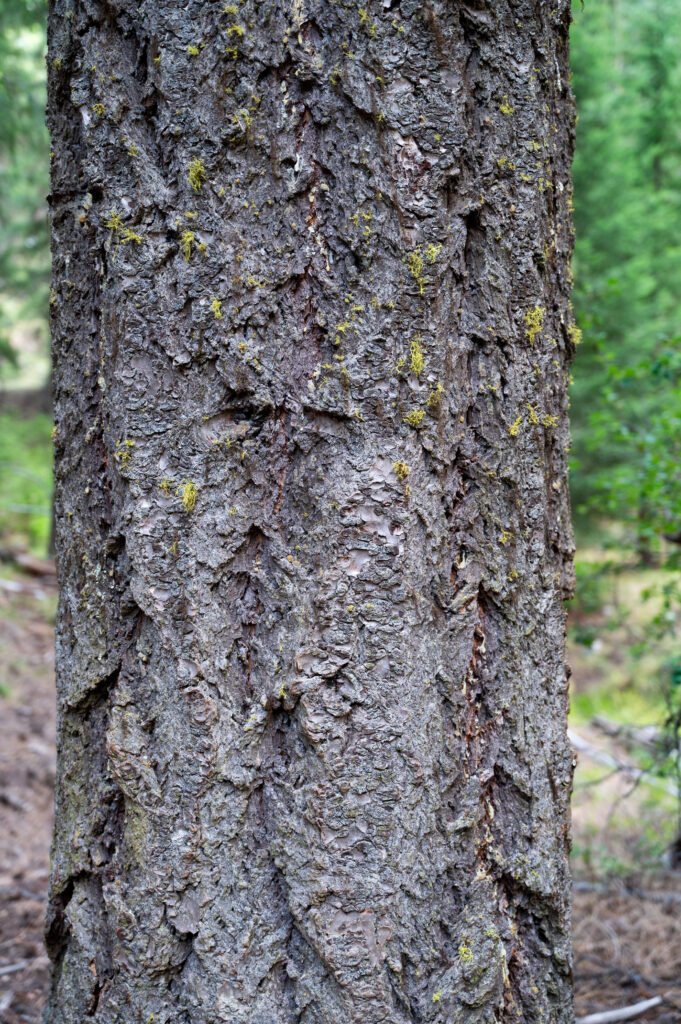
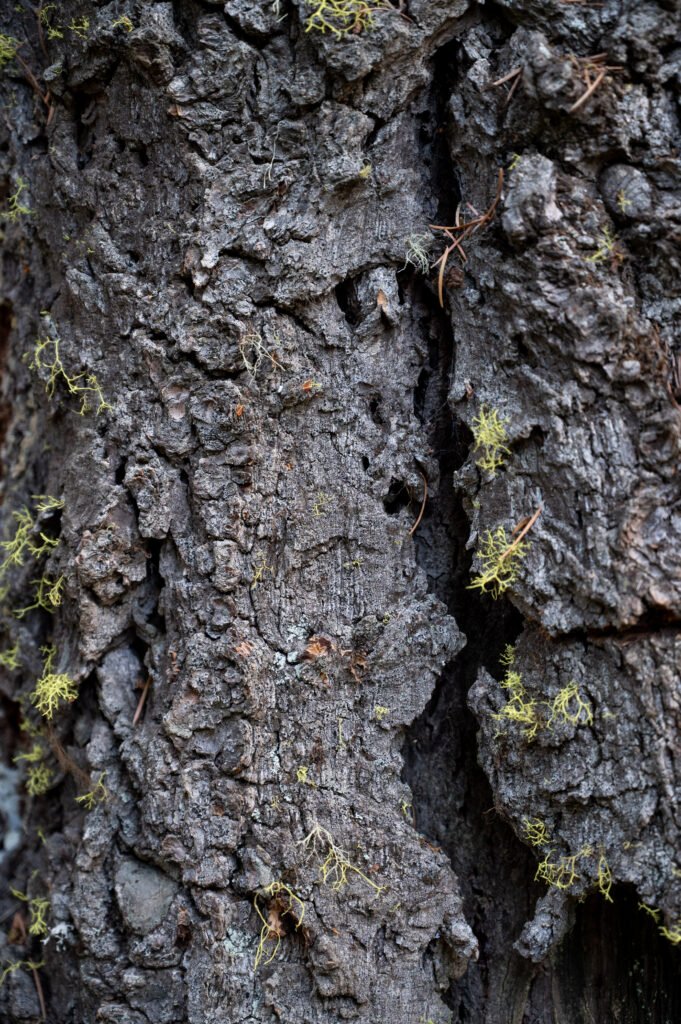
The bark of Douglas firs varies greatly depending on the individual and the age of the tree. The bark on younger tree is thin, smooth and covered in sap-filled blisters. As the trees age, the bark becomes much more deeply cracked and furrowed, and almost cork-like. Above are examples of Douglas-fir bark from youngest to oldest. Note just how deep the furrows in the bark can be on old trees. As trees reach ages of 80 years and older, the bark may be up to 14 inches thick. That’s a serious suit of armor!
Sources
Dunk, Jeffrey R. Red-tree vole habitat suitability modeling: Implications for conservation and management. Elsevier. Forest Ecology and Management, Volume 258, Issue 5, 20 August 2009, Pages 626-634.
N. Meiselman and A. T. Doyle. Habitat and Microhabitat Use by the Red Tree Vole (Phenacomys longicaudus). The American Midland Naturalist
Vol. 135, No. 1 (Jan., 1996), pp. 33-42 Wilk, Randal J. Nest trees of northern spotted owls (Strix occidentalis caurina) in Washington and Oregon, USA. PLOS ONE. 2018.